
Advice
What happens in a free damp survey (and what you get afterwards)
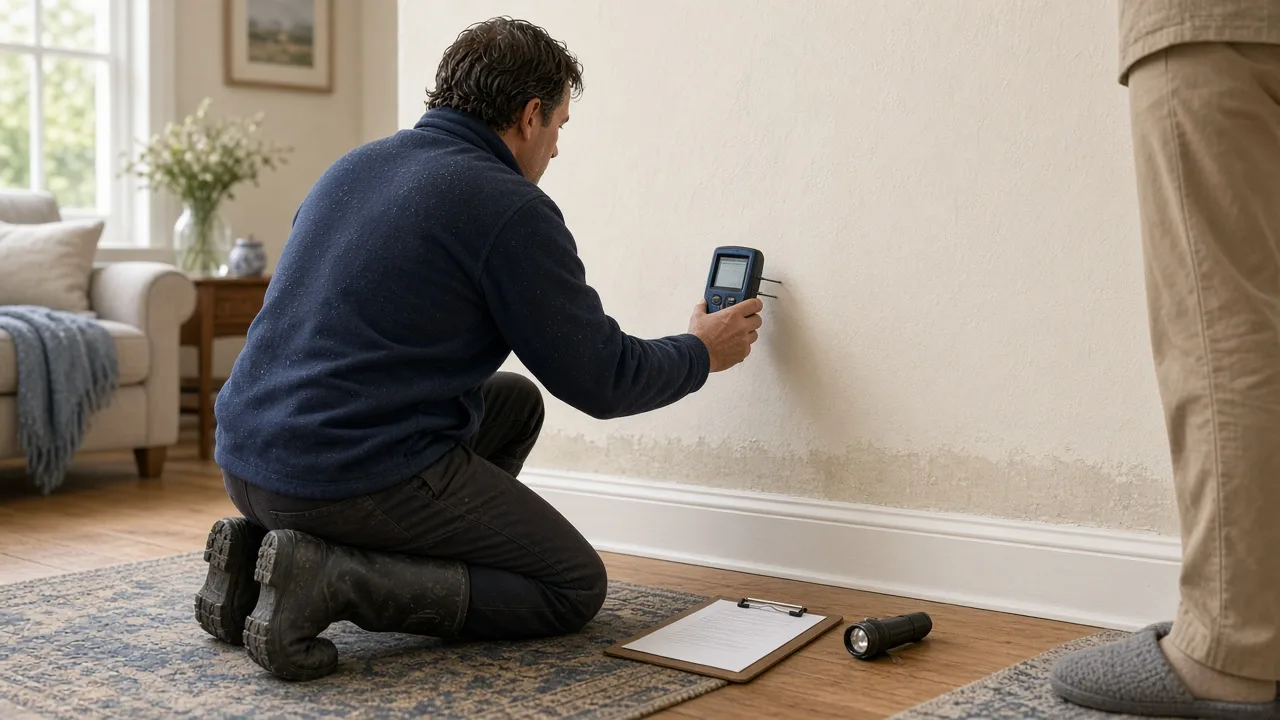
If you’ve noticed damp at home, booking a survey can feel like opening a can of worms. Will someone turn up, frighten you with a meter and hand you a huge quote before they’ve really looked?
Not with us. A good damp survey is simply a careful, honest look at the wall to work out why it’s damp, so the fix actually works. This guide explains exactly what happens on one of our free damp surveys, from the first message to the written recommendation, so you know what to expect.
Before the visit: photos and a few questions
Most surveys start with a WhatsApp message. If you can, send:
- a photo of the damp area close up
- a photo of the whole wall, so we can see where the damp sits
- a photo of the same wall from outside, including the ground at the bottom and the gutter at the top
Sometimes the photos are enough for us to give you a useful first view. Often they tell us what to look for on the day. If we need to see it, we’ll arrange a visit at a time that suits you.
We’ll also ask a few questions, because the answers are clues:
- When did you first notice it? Is it getting worse?
- Is it worse in winter, or after rain?
- Has anything changed recently: a new patio, a new kitchen, replacement windows, work on the render?
- How is the house heated, and where do you dry washing?
- Do you know of any previous damp treatment or guarantee?
Outside first
The outside of the wall often explains the inside, so that’s usually where we start. We look at:
- Ground levels. Is soil, paving, a path or a flower bed sitting too high against the wall? If it’s above the damp-proof course, it can let damp bypass it.
- The damp-proof course line, where it can be seen, and whether render or anything else has been taken down over it.
- Gutters and downpipes. Are they blocked, leaking or overflowing onto the wall?
- Render and pointing. Cracks, hollow patches, failed pebbledash, open joints.
- Window sills and seals. Do the sills throw water clear of the wall? Is the mastic sound?
- Chimneys and flashings, if the damp is high up or on a chimney breast.
Then inside
Inside, we look at the pattern of the damp, which is often more revealing than any single reading.
- Where is it? Low on a ground-floor wall, high in a corner, around a window, behind furniture?
- What does it look like? A tide mark, salts, blown plaster, black mould, wet glass?
- How does the plaster sound? We tap it to find hollow or blown areas that will need to come off.
- What’s the wall made of? Solid or cavity, brick or stone, old lime plaster or modern gypsum.
- Skirting and timber. Any decay at the base of the wall. If we find damaged skirtings or floor timbers, we can replace them as part of the work.
- Ventilation. Existing extractor fans, trickle vents, how the rooms are used, and signs of condensation. We don’t fit fans, PIV units or other electrical work, but we’ll advise and can recommend an electrician if that’s what’s needed.
Moisture readings: useful, but not the whole story
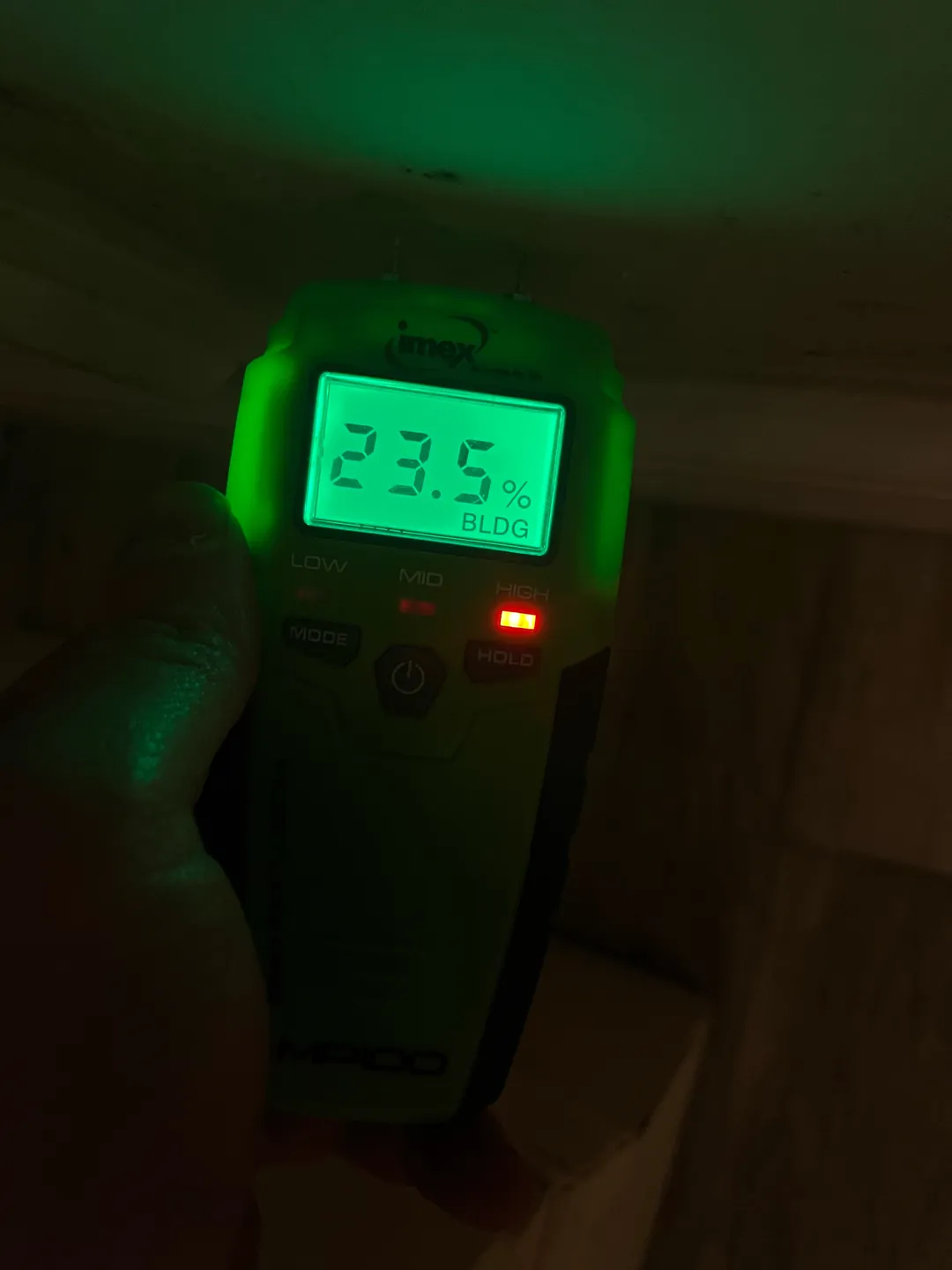
We take moisture meter readings where they’re useful, usually at several heights and points along the wall, so we can see how the moisture is spread rather than relying on one number. A pattern that is high at the bottom and falls away with height tells a very different story from a single wet patch under a window.
It’s worth knowing what a meter can and can’t do. Most handheld meters measure how easily electricity passes through the surface. Salts in old plaster conduct very well, so a salty wall can read high even when it isn’t especially wet, and some wallpapers and paints can skew readings too. That’s why we never diagnose from a meter alone. The readings are one piece of evidence, alongside everything else we’ve seen inside and out.
We talk you through it, there and then
Before we leave, we’ll explain what we think is happening and why, in plain English. If we can’t be sure yet, we’ll say so, rather than push a treatment. You’re welcome to ask as many questions as you like.
The answer might be:
- Rising damp, or a bridged damp-proof course
- Penetrating damp from a gutter, render, pointing, a sill or a chimney
- Condensation, which needs heating and ventilation changes rather than a damp-proof course
- A mix, which is more common than you might think
Our guide to rising damp vs condensation goes into the differences in more detail.
What you get afterwards
You get our recommendations in writing, and a free, no-obligation quote for the work we think is needed. Full system spec sheets are available on request, so you can see exactly what we’d use and why.
If the fix is something small you can sort yourself, such as clearing a gutter, we’ll tell you. We can also lower or pull back paths and flower beds that have bridged the damp-proof course, carry out a mould wash, replace decayed skirtings or floor timbers, and install a cavity-drain membrane where a wall holds back earth. We don’t fit extractor fans, PIV units or other electrical work, but we’ll advise on ventilation and can recommend an electrician.
If it’s a full treatment, it usually means taking off the salt-damaged plaster, treating the cause (for example a new damp-proof course, or putting right the render outside), and replastering with a salt-resistant, renovating or lime-based system, ready to decorate once it’s dry.
Every damp-proofing job we carry out comes with guaranteed workmanship and a 10-year guarantee on damp proofing works, plus a Job Completion & Aftercare Pack with progress photos and drying-out advice.
What we won’t do
- We won’t diagnose from a meter reading alone.
- We won’t sell a damp-proof course for condensation.
- We won’t pressure you to decide on the day.
- We won’t quote for work the wall doesn’t need.
How to get the most from your survey
- Clear access to the affected wall, inside and out, if you can. Moving a sofa or a wardrobe a little helps a lot.
- Don’t repaint or scrub it first. We need to see the wall as it is.
- Make a note of when it’s worst: mornings, after rain, in certain rooms.
- Dig out any paperwork for previous damp treatment, guarantees, or recent building work.
Book your free damp survey
We carry out free damp surveys across Grimsby, Cleethorpes, Immingham, Scunthorpe, Louth, Lincoln and the other towns on our areas page. Send a few photos on WhatsApp for an honest first view, or book a free survey. There’s no obligation and no pressure. You can also read how render can affect damp and why damp gets worse in winter.